Story
Shortage of Family Physicians: New Study Shows How Outpatient Care Can Still Succeed
Germany is expected to be short of around 12,000 family physicians by 2040. This is one of the findings of the new study “Primary Care 2035+” by the Bosch Health Campus. It also shows what sustainable family medical care could look like. Modern care centers, such as the practice of family physician Alexander Mittlmeier and the PORT Ambulatory Health Care Center, are already embracing new ideas and technologies today.
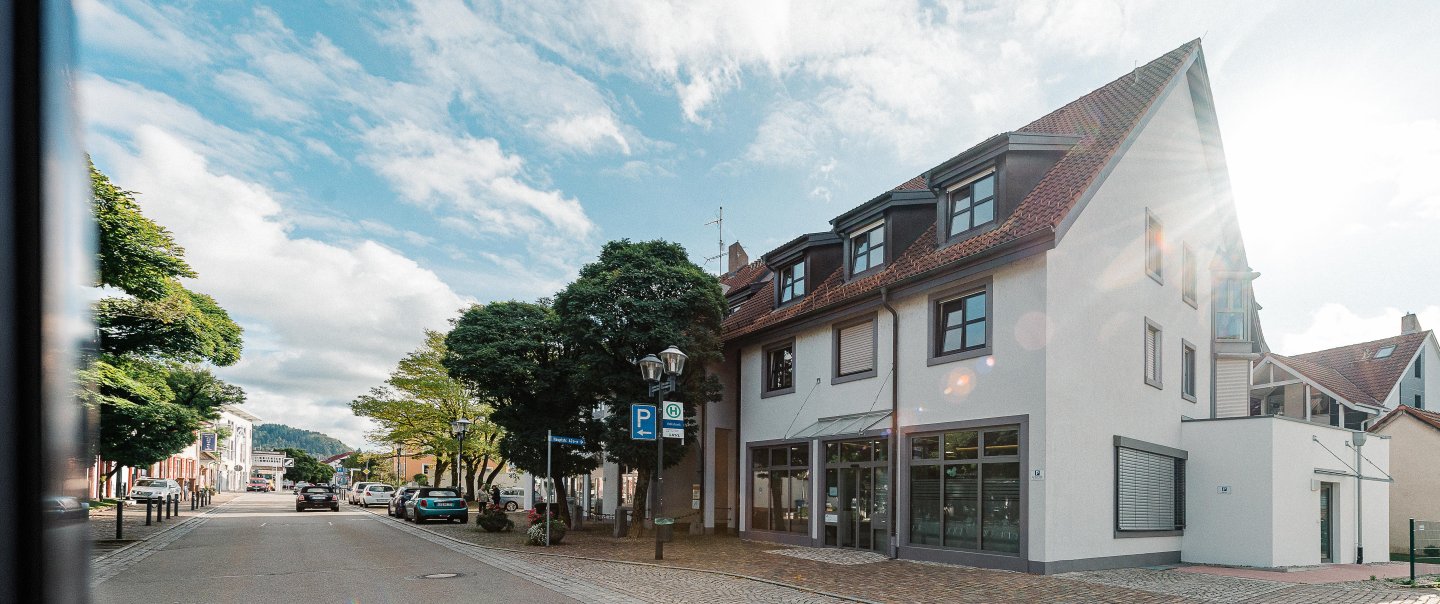
This unassuming building is home to one of Germany's most advanced family practice clinics. Patients check in at a terminal, communicate with staff via an app, and receive care and treatment that is all the more personalized as a result.
When Alexander Mittlmeier arrives at his family practice in the morning, the first thing he does is check his screen and the patient app. New requests have come in overnight: one patient sent a photo of a skin lesion, and another needs a refill prescription. Mittlmeier reviews the requests, prioritizes them, and decides who can be helped digitally and who should come into the office as soon as possible. Meanwhile, the first patients check in at the practice’s registration terminal, which at first glance looks like an ATM. Those who prefer personal contact with the practice staff check in the traditional way at the front desk.
There are hardly any long wait times at his practice in Maulburg in Southern Germany. That’s because it’s not just digital services like the registration terminal that speed up the process. A multidisciplinary team of healthcare professionals from various fields also ensures that more time is available for primary care and personalized patient care. “Many people are relieved to find a primary care physician again and are then willing to embrace our innovations, even if they seem unfamiliar at first,” says Mittlmeier.

What is already part of everyday practice in his office could serve as a model in many places. As the new study “Primary Care 2035+” shows, a shift in thinking is urgently needed if primary care in Germany is to be secured for the future. The study, conducted by the IGES Institute on behalf of the Bosch Health Campus, examined the nationwide trend in general practice capacity. According to the study, by 2025 more than one in three practicing general practitioners was already 60 years old or older. In addition, the number of full-time family physicians is declining as a result of changing work models. As the study forecasts, approximately 12,000 family physician positions nationwide will remain unfilled by 2040. Rural areas are particularly affected.
The study’s authors make it clear that the looming shortage of primary care physicians cannot be resolved solely by increasing the number of medical school spots. Instead, they argue, primary care —that is, the first point of contact in the healthcare system — needs to be fundamentally reorganized. While primary care practices should remain the first port of call for patients, they should carry out their work more extensively within multiprofessional teams: Nurses, psychologists, physical therapists, and other healthcare professionals should take on more responsibility and contribute their expertise in a targeted manner. This would help relieve the burden on physicians, allowing them to work alongside their colleagues to perform important tasks: making complex diagnoses, deciding on treatments, and supporting people with chronic illnesses.
Digitalization Makes Processes More Efficient
Digitalization can simplify treatment processes, improve communication, and make it easier for patients to access care. Digital applications are not an end in themselves, but rather a means of making processes more efficient. Patients who are already registered at Mittlmeier’s practice can contact his team via an app, send images, fill out questionnaires before their appointment, or check in digitally at the practice. This saves a lot of time, Mittlmeier emphasizes. Together with the Ärztenetz Dreiländereck association, his practice also ensures better coordination and appointment scheduling with specialists.
Prevention and Social Support
At the same time, the study emphasizes that digital services cannot replace personal contact. Patient-centered care close to home — which combines prevention, health promotion, treatment, and social support — remains crucial.
One example of this approach is the PORT Ambulatory Health Care Center at the Bosch Health Campus. It complements primary care in Stuttgart, provides long-term support to people on health issues, and focuses specifically on health promotion and prevention through courses and counseling services. Thanks to its connection to the Robert Bosch Hospital, outpatient and inpatient care are closely integrated.

In Denmark, Alexander Mittlmeier encountered a healthcare system in which doctors, nurses, and other healthcare professionals work together as equals as a matter of course. He brought this experience back with him to Germany.
Learning from Other Countries
Even while he was studying medicine, Alexander Mittlmeier knew he would eventually do some things differently than other family physicians. He completed part of his studies in Denmark—where he experienced a healthcare system in which doctors, nurses, and other healthcare professionals naturally worked together as equals and handled many tasks digitally. He brought this experience back with him to Germany. When he opened his practice in 2019, he focused from the very beginning on teamwork, digital processes, and a consistent division of tasks. Today, he hopes his approach will inspire other family practice clinics as well.
“Without this close monitoring, the patient’s incipient depression would likely have gone undetected for a long time.”
The example of a patient with chronic leg wounds illustrates just how well his approach works. Instead of having him cared for by an outpatient nursing service, Mittlmeier explains, his team regularly brought him to the practice. There, a geriatric nurse noticed that his mood was progressively worsening. “Without this close monitoring, the patient’s incipient depression would likely have gone undetected for a long time,” says the family physician. A physical therapist, who is also part of the practice team, developed an exercise program together with the patient. It was a success: “Not only did the patient’s mood improve, but he also regained mobility, and his leg healed better,” says Mittlmeier.
For him, that is precisely the great advantage of interprofessional collaboration: When different professional groups work closely together and exchange information regularly, important information is not lost. And patients benefit from holistic care.
Politicians Must Step Up
For a model like Mittlmeier’s to function nationwide in the future, it will take more than just a shift in mindset among many practices. The political framework must also change, says Mittlmeier. In the future, teamwork must be reflected in both legal requirements and reimbursement systems. At the same time, there needs to be more flexibility for digital solutions and a more sensible distribution of tasks among healthcare professions.
“And we must make the profession more attractive to the next generation again. Only then will we be able to secure care in the long term.”
“Family physicians will remain an important point of contact in the healthcare system in the future. But we must enable them to work in strong teams and utilize modern structures,” says the family physician. “And we must make the profession more attractive to the next generation again. Only then will we be able to secure care in the long term.”