

The Robert Bosch Center for Innovative Health (RBIH) pursues the social mission of its founder, Robert Bosch. Since 2022, the former Health funding area of the Robert Bosch Stiftung has continued its successful work as the RBIH at the Bosch Health Campus. As part of the Bosch Health Campus and together with national and international partners, the RBIG develops tangible innovations in health care based on the latest scientific findings and evidence-based recommendations.
The RBIG creates space for learning and experimentation, initiates and supports pilot projects, and contributes its own findings and experience to the political discourse. By shaping innovation, building bridges, and facilitating transformation, the RBIH is actively helping to shape a fair and sustainable health care system in Germany. The aim of these initiatives is to help people in Germany live more years in good health. Particular attention is given to underrepresented and underserved groups. Public calls for proposals, strategic partnerships, and various dialogue formats empower internal and external stakeholders and enable close collaboration.
Health care in Germany
The German health care system is among the most expensive in the world: In 2024, health care spending accounted for 12.4 percent of the gross domestic product. Despite this high level of spending, Germany achieves only average results in international comparisons regarding key health indicators such as life expectancy and preventable hospitalizations.
There are many reasons for this. In particular, structural challenges – such as the shortage of skilled workers, fragmented care systems, and demographic change – hinder the provision of needs-based, holistic, and coordinated care throughout the entire patient pathway. The strict separation between outpatient, inpatient, and nursing care frequently leads to gaps in the course of treatment, long waiting times, avoidable repetition of tests, and inadequate coordination among the parties involved. In addition, the potential of digital transformation has not yet been consistently harnessed. (Source:The Future of Health Care and Health expenditure - German Federal Statistical Office)
In addition, the system continues to focus on the treatment of diseases. Prevention, health promotion, and maintaining good health throughout all stages of life, on the other hand, play a comparatively minor role: Only around four percent of health care spending currently goes toward prevention and health protection. At the same time, the prevalence of lifestyle-related diseases such as obesity, type 2 diabetes, and cardiovascular diseases has increased significantly.
For many people, it is difficult to find, understand, and evaluate health information and use it to make informed decisions. This kind of health literacy, however, is an important prerequisite for health-promoting behavior and for sustainably relieving the burden on the health care system. Approximately 56 percent of people in Germany have limited health literacy (HLS-GER3, University of Bielefeld, 2025).
The vision
The work at the RBIH focuses on helping to shape a sustainable and resilient health care system in Germany that enables more healthy life years for everyone and ensures sustainable health care for future generations as well.
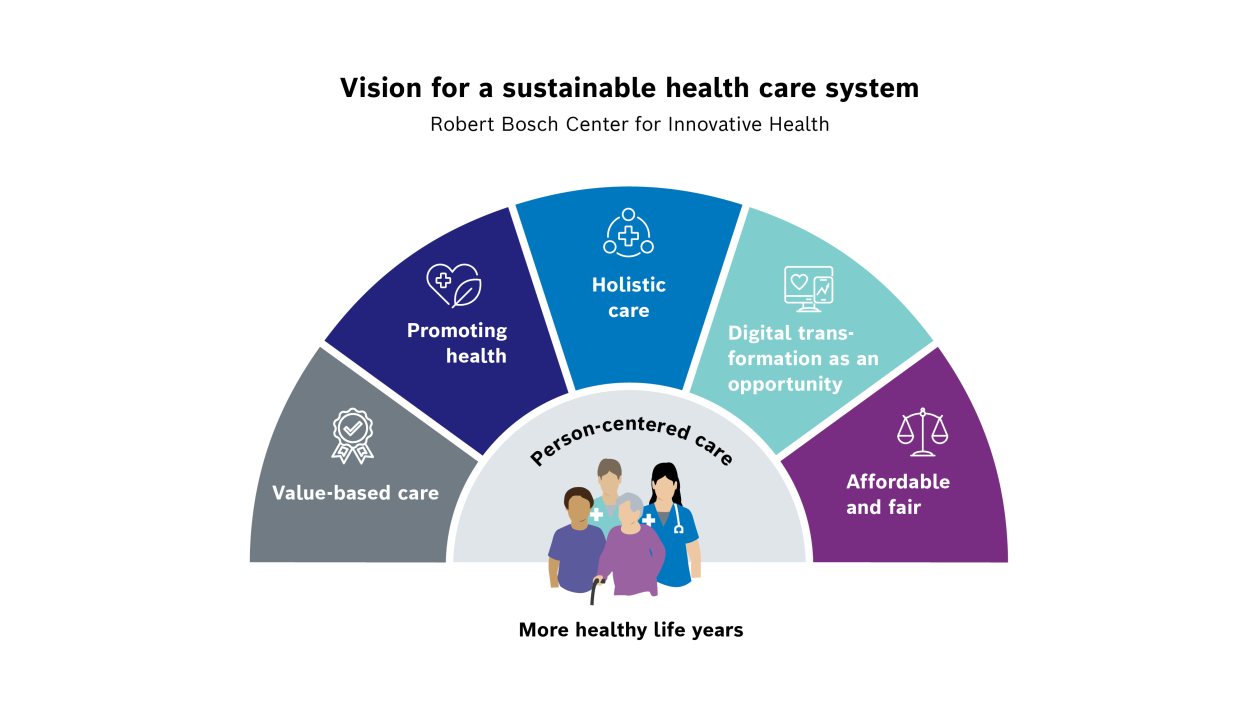
Strategic Areas of Action at RBIH
Through five interrelated areas of action, RBIH brings together expertise, experience, and innovative strength to help shape a fair and sustainable health care system. Building on proven pilot projects, innovative approaches are further developed and scaled up to bring about lasting improvements in care, prevention, and collaboration within the health care system.